

I began my final year of my Master of Science in Nursing Degree at Trinity Western University knowing that I wanted to focus my capstone project on global health and mother/child health. Dr. Reimer-Kirkham, my supervisor, invited me to complete a Knowledge Translation (KT) project related to the Mothering and Albinism project. Given my background in maternity nursing and my interest in global health (with connections to maternal health in Burundi, Africa), we decided on a project about health professions education in relation to albinism.
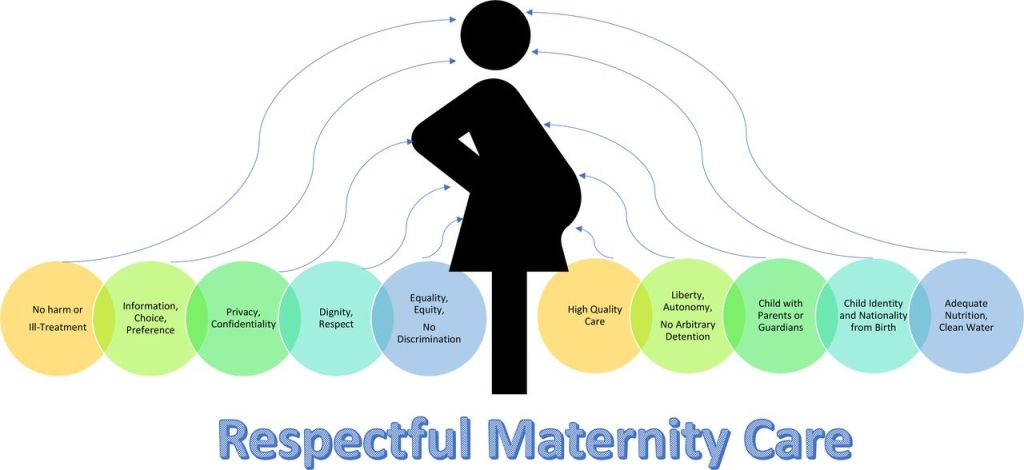
Early in my KT project, I was introduced to the concept of Respectful Maternity Care (RMC). RMC refers to care organized for and provided to all women in a manner that maintains their dignity, privacy, and confidentiality; ensures freedom from harm and mistreatment; and enables informed choice and continuous support during labour and childbirth (World Health Organization, 2018). I was amazed at what a large movement it is worldwide and likewise surprised that I had not come across the concept earlier despite working as a maternity nurse for over 20 years. I learnt of its origins in response to global trends of medicalized birth, obstetical violence, and the need to humanize birth with a more holistic approach. What an important initiative, and what a difference RMC might make for mothers who give birth to a baby with albinism.
I have learned during my engagement in the Mothering and Albinism research that many mothers do not benefit from RMC when they give birth to a baby with albinism (Reimer-Kirkham et al., 2020; Taylor et al., 2021). The care, attitude, and knowledge of a nurse or midwife, however, can quickly provide a foundation for the adjustment a mother must make and the challenges they may face, especially for mothers who have no knowledge about albinism or relatives with the condition. These birth stories are what prompted me to focus the attention of my KT project on RMC, specifically in relation to albinism.
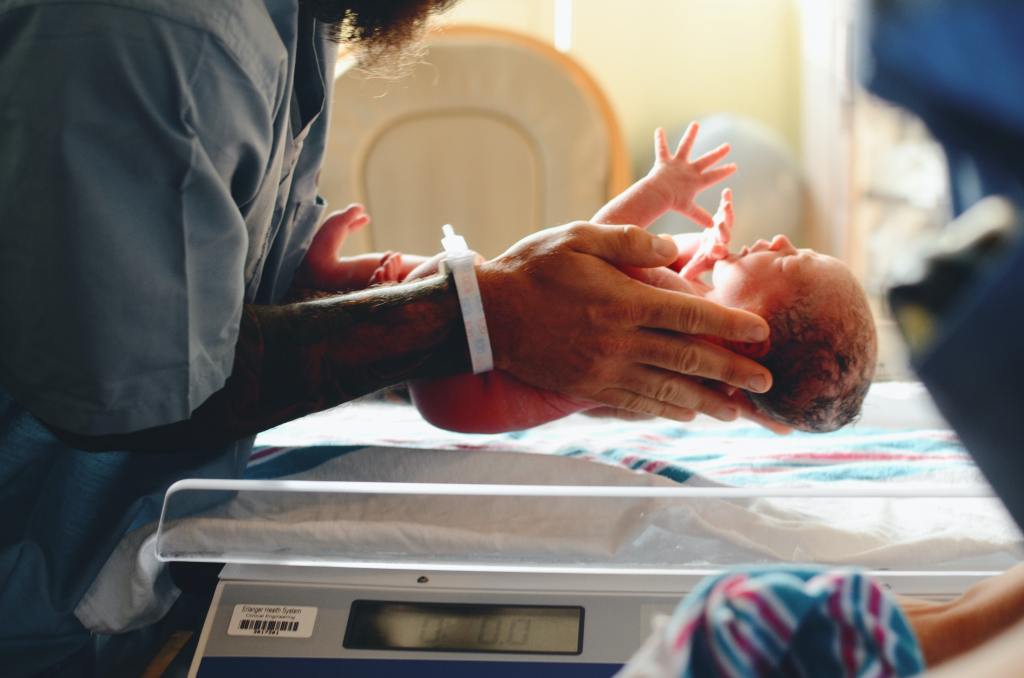
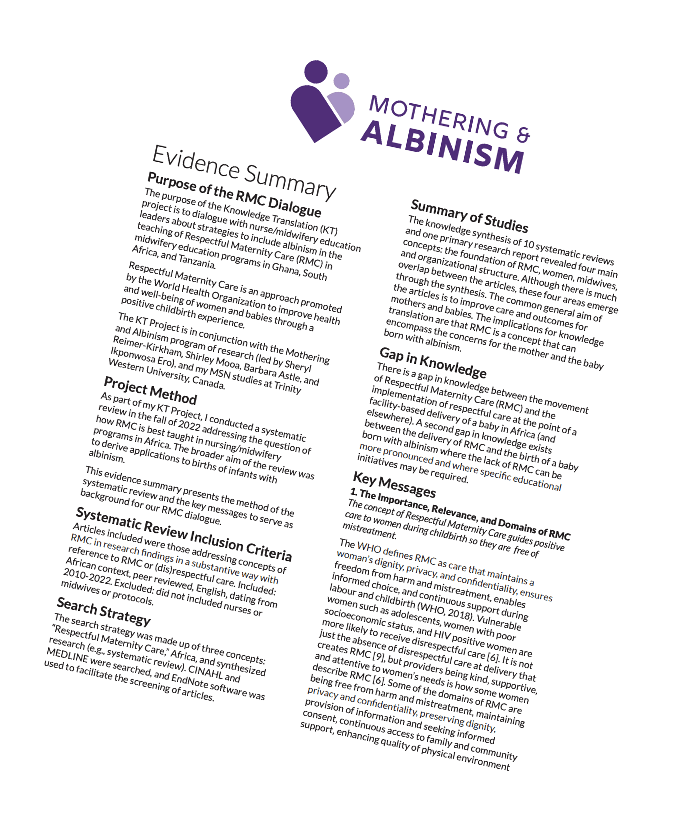
My first step was to synthesize existing academic literature on RMC applied to sub-Saharan Africa, with the aim of summarizing the evidence about how policy and educational interventions might foster RMC for both the mother and the baby born with albinism. The knowledge synthesis was insightful in revealing an emerging body of evidence on RMC in sub-Saharan Africa. In total, I included 10 literature reviews (i.e., synthesis of several studies) and one primary study in my synthesis. Although none of these articles were focused on albinism births, I used extraction questions to gather indirect lessons that related to RMC and albinism. Based on my synthesis of the academic literature, I identified key messages on RMC, albinism, and nursing and midwifery education (See Evidence Summary below).
Following and building on the knowledge synthesis, the action portion of my KT project evolved. I developed a plan to collaborate with nurse/midwife education leaders in Africa to gain a better picture of what is currently being taught in schools of midwifery in order to contextualize the key messages. I hosted an online engagement session on March 6, 2023, for nurse/midwifery education leaders to discuss RMC education in each of their institutions and how albinism could be included as a way to equip future nurses and midwives to care for babies born with albinism in a respectful, appropriate, and equipping way.
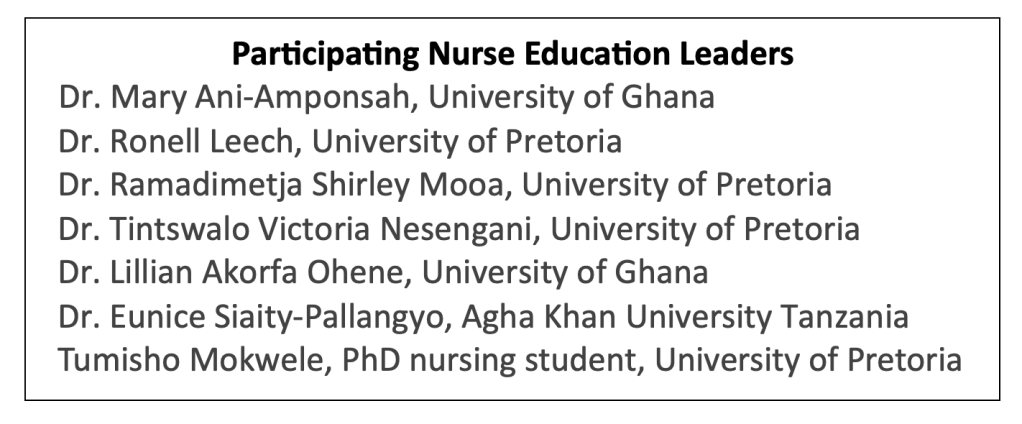
Nurse educators and members of the Mothering & Albinism research team from Ghana, Tanzania, and South Africa joined the dialogue. This was an insightful time to envision an approach to include albinism in the teaching of RMC. Nurse education leaders offered varying ideas of how to incorporate albinism into the teaching of RMC, such as teaching RMC as a course on its own, combining it with the teaching of human rights, or including it in the teaching of newborn assessments, disabilities, or ethics. Exploring these ideas with leading nurse/midwifery educators contributes to the groundwork for the recently funded Birthing Stories project which involves intersectoral partnerships for enhanced health professions education (more information here).
Key Messages
1. The importance, relevance, and domains of RMC
- The concept of Respectful Maternity Care guides positive care to women during childbirth so they are free of mistreatment.
2. The outcomes of RMC
- RMC is known globally for producing positive outcomes for mothers and babies (Shakibazadeh et al., 2018). Women value RMC and consider it a significant factor in making decisions about accessing postnatal care (Lythgoe et al., 2021).
3. The implementation of RMC
- Implementation of RMC requires action in many areas such as education and role development, organization resources and support, and multi-level policy accountabilities. RMC can be promoted and supported using innovative approaches to integrate RMC in the quality care of mothers and newborns (Shakibazadeh et al., 2018).
4. The content and educational strategies for RMC
- Education is a necessary component in equipping midwives to provide RMC. Midwives can be empowered through teaching to be leaders and change agents (Wilson-Mitchell et al., 2018) and can further educate women on their rights in order to empower them (Ishola et al., 2017).
5. Albinism, RMC, and midwifery education
- RMC can be a vehicle for integrating knowledge about albinism. There are increased needs for a mother who has given birth to a baby with albinism, including health education regarding how to care for the infant with albinism and potentially support for her own psychological needs. Disrespectful care can be more extreme for a woman who has given birth to a baby with albinism because of stigma and discrimination. While teaching midwives about RMC, it could be deduced that increased knowledge of albinism would enhance the RMC given to a mother and baby born with albinism. Midwives could be encouraged to be leaders in the positive response to albinism births. Albinism births can be positively affected by RMC, and RMC is best learned through education and positive modeling of care.
References
Ishola, F., Owolabi, O., & Filippi, V. (2017). Disrespect and abuse of women during childbirth in Nigeria: A systematic review. PloS One, 12(3), e0174084. https://doi-org.twu.idm.oclc.org/10.1371/journal.pone.0174084
Jones, I., Thompson, A., Dunlop, C.L. & Wilson, A. (2022). Midwives’ and maternity support workers’ perceptions of the impact of the first year of the COVID-19 pandemic on respectful maternity care in a diverse region of the UK: A qualitative study. BMJ Open, 12(e064731). doi:10.1136/bmjopen-2022-064731
Lythgoe, C., Lowe, K., McCauley, M., & McCauley, H. (2021). How women’s experiences and perceptions of care influence uptake of postnatal care across sub-Saharan Africa: A qualitative systematic review. BMC Pregnancy & Childbirth, 21(1), 1–11. https://doi-org.twu.idm.oclc.org/10.1186/s12884-021-03910-6
Reimer-Kirkham, S., Astle, B., Ero, I., Imafidon, E., & Strobell, E. (2020). Mothering, albinism and human rights: The disproportionate impact of health-related stigma in Tanzania. Foundation of Science., 27, 719–740. https://doi.org/10.1007/s10699-020-09701-0
Shakibazadeh, E., Namadian, M., Bohren, M. A., Vogel, J. P., Rashidian, A., Nogueira Pileggi, V., Madeira, S., Leathersich, S., Tunçalp, Ӧ, Oladapo, O. T., Souza, J. P., & Gülmezoglu, A. M. (2018). Respectful care during childbirth in health facilities globally: A qualitative evidence synthesis. BJOG : An International Journal of Obstetrics and Gynaecology, 125(8), 932–942. https://doi-org.twu.idm.oclc.org/10.1111/1471-0528.15015
Taylor, J., Bradbury-Jones, C., Ojik, P., Kawuma, F., Betts, J. & Lund, P. (2021). Reactions to and explanations for the birth of a baby with albinism: A qualitative study in Busoga, Uganda. BMJ Open, 11(2), 1-7. https://doi.org/10.1136/ bmjopen-2020-040992
Wilson-Mitchell, K., Eustace, L., Robinson, J., Shemdoe, A., & Simba, S. (2018). Overview of literature on RMC and applications to Tanzania. Reproductive Health, 15(1), N.PAG. https://doi-org.twu.idm.oclc.org/10.1186/s12978-018-0599-z
World Health Organization. (2018). Intrapartum care for a positive childbirth experience. http://apps.who.int/iris/bitstream/handle/10665/260178/9789241550215-eng.pdf;jsessionid=7E800B590A164DC7FC879E73B480D6FC?sequence=1
Written by:

Ingrid Watts, MSN RN, Research Associate

 Mothering & Albinism