
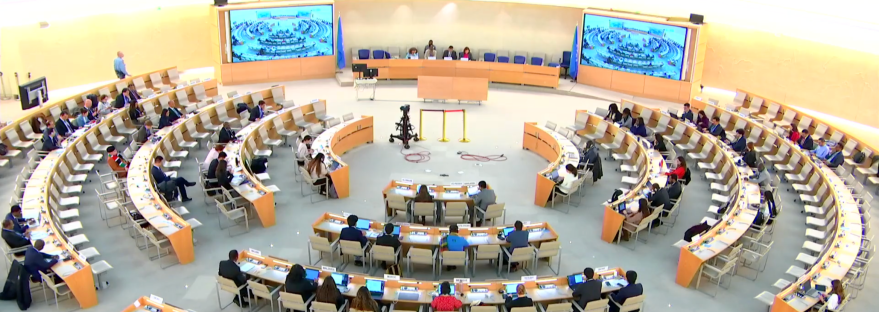
The protection of persons with albinism has gained increased attention on the international stage over the last decade, driven mainly by the efforts of the United Nations (hereafter, UN) and its Independent Expert on the enjoyment of human rights by persons with albinism. Ikponwosa Ero served as an Independent Expert from 2015 to 2021,[1] followed by Muluka-Anne Miti-Drummond, who took over in 2021 and continues to serve. [2] My internship with Mothering & Albinism under the mentorship of the UN Independent Expert Muluka-Anne Miti-Drummond on the enjoyment of human rights by persons with albinism has been an enriching journey. As part of the broader research project of the UN, “Reflecting on 10 Years of the UN Independent Expert on Albinism,” my work primarily focused on international standards, UN treaties, resolutions, and general comments that address the rights and protection of persons with albinism. Thus, this blog post explores the development and significance of international standards addressing albinism, mainly focusing on UN resolutions. These resolutions highlight the challenges faced by persons with albinism but also demonstrate the global commitment to addressing their unique vulnerabilities and ensuring their fundamental human rights.
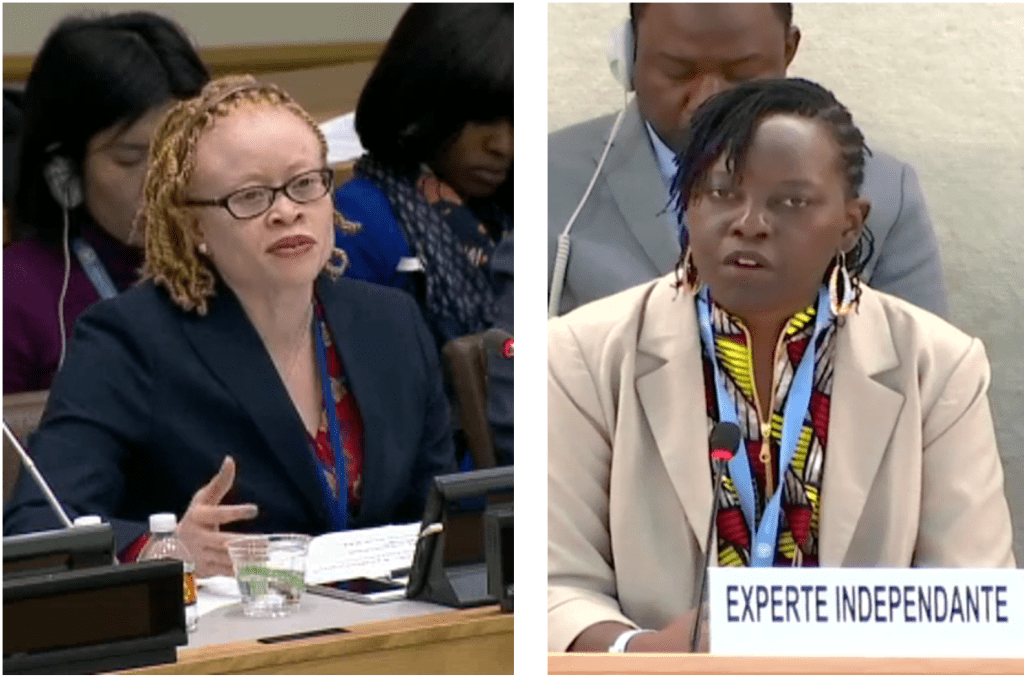
Source: UN Albinism on Facebook
Understanding albinism and the need for protection
Albinism is a rare genetic condition characterised by a significant reduction or absence of melanin production, affecting skin, hair, and eye pigmentation.[3] While it is a medical condition, its socio-cultural implications render persons with albinism particularly vulnerable to discrimination, violence, and social exclusion.[4] Myths and superstitions surrounding albinism have led to horrifying practices such as ritual killings and the trafficking of body parts for alleged magical benefits.[5] Therefore underlining the need for international standards to address these issues, promote awareness, and safeguard the rights and dignity of persons with albinism.
Key UN resolutions addressing albinism
UN resolutions have been key in laying the foundation for international advocacy on albinism. Adopting Resolution A/RES/69/170 by the UN General Assembly in 2014 marked a milestone by proclaiming June 13 as International Albinism Awareness Day.[6] This annual observance underscores the need to end discrimination and violence against persons with albinism while promoting awareness and inclusion globally. Similarly, the Human Rights Council’s Resolution A/HRC/RES/28/6 in 2015 specifically condemned attacks and discrimination against persons with albinism.[7] It called on states to implement measures to protect their rights, ensure their safety, and combat harmful stereotypes. In 2021, Resolution A/HRC/RES/46/12 reaffirmed the Council’s commitment to addressing the severe human rights violations faced by persons with albinism, emphasising the importance of intersectional approaches, particularly concerning the compounded vulnerabilities of women and children with albinism.[8] Furthermore, the Regional Action Plan on Albinism in Africa (2017–2021), included in Resolution A/HRC/37/57/Add.3, provided a framework for addressing systemic challenges such as discrimination, violence, and access to healthcare and education.[9] It was then later adopted by the Africa Union to develop the Plan of Action to End Attacks and Other Human Rights Violations Targeting Persons with Albinism in Africa (Plan of Action 2021-2031).[10] Together, these resolutions demonstrate the international community’s acknowledgement of the unique challenges faced by persons with albinism and the need for targeted and sustained interventions.
Moreover, establishing the mandate for an Independent Expert on the enjoyment of human rights by persons with albinism in 2015, with Ikponwosa Ero as the first appointee, was a landmark achievement. The Independent Expert’s role has been critical in raising awareness, fostering collaboration, and providing recommendations. Reports and country visits by the Independent Experts have brought global attention to the issues faced by persons with albinism. For instance, the visit to Tanzania in 2017 highlighted the systemic challenges in addressing ritual killings and provided recommendations for comprehensive policy reforms.[11] Moreover, both Ikponwosa Ero and Muluka-Anne Miti-Drummond, in their roles as Independent Experts, have facilitated collaboration among states, civil society, and international organisations, ensuring a unified approach to addressing the rights of persons with albinism.[12] Through detailed reports to the Human Rights Council, the Independent Experts have offered actionable recommendations, such as strengthening legal frameworks, enhancing public awareness, and ensuring access to healthcare and education for persons with albinism.
Persistent challenges
Despite these significant advancements, challenges persist in fully realising the rights of persons with albinism. Many resolutions lack binding authority, as they are considered soft law, limiting their enforceability at the national level.[14] Deep-rooted myths and superstitions continue to fuel discrimination and violence, particularly in rural areas of sub-Saharan Africa. Limited financial and institutional resources hinder the implementation of protective measures, such as providing sunscreen, low-vision aids, and inclusive education. Furthermore, women and children with albinism often face compounded discrimination,[15] requiring targeted interventions that address multiple layers of marginalisation.
Reflections on the role of international standards
UN resolutions serve as powerful tools for advocacy, raising global awareness and prompting states to take action. However, their impact ultimately depends on sustained efforts at both the international and local levels. The role of civil society cannot be overstated. Programs of research working on the ground, such as Mothering & Albinism, have demonstrated the importance of community-driven initiatives in complementing international efforts. These researchers are comprised of an interdisciplinary team that conducts research to empower persons with albinism to advocate for their rights.
Furthermore, it can be noted that the past decade has seen progress in addressing the rights of persons with albinism, mainly due to the concerted efforts of the two Independent Experts on the Enjoyment of Human Rights for Persons with Albinism, UN, researchers, African Union, and civil society. However, the journey is far from complete. Continued advocacy, access to services and resources, such as eye care, sunscreen, and community engagement, are essential to ensuring that persons with albinism enjoy their rights equally with others. This reflection on international standards has deepened my understanding of the intersection between law, policy, and human rights advocacy. Conclusively, the rights of persons with albinism remain a pressing and ongoing endeavour that requires all stakeholders’ collective effort.
References
[1] https://www.ohchr.org/en/stories/2015/08/new-independent-expert-albinism-takes-post
[3] Reimer-Kirkham, S., Astle, B., Ero, I., Imafidon, E., & Strobell, E. (2020). Mothering, albinism and human rights: The disproportionate impact of health-related stigma in Tanzania. Foundation of Science., 27, 719–740. https://doi.org/10.1007/s10699-020-09701-0
[4] Amnesty International. (2016, June 13). Malawi: Killing spree of people with albinism fuelled by ritual practices and policing failures. https://www.amnesty.org/en/latest/news/2016/06/malawi-killing-spree-of-people-with-albinism-fuelled-by-ritual-practices-and-policing-failures/
[5] Office of the United Nations High Commissioner for Human Rights. (2024, April 20). Tanzania’s lack of investigation and action equivalent to condoning ritual killings. https://www.ohchr.org/en/press-releases/2024/04/tanzanias-lack-investigation-and-action-equivalent-condoning-ritual-killings.
[6]A/RES/69/170 – General Assembly – the United Nations https://documents.un.org/doc/undoc/gen/n14/707/31/pdf/n1470731.pdf
[7] Resolution adopted by the Human Rights Council 28/6. Independent Expert on the enjoyment of human rights by persons with albinism https://www.right-docs.org/doc/a-hrc-res-28-6/
[8]Reimer-Kirkham, S., Ero, IK., Astle, B., Buyco, M., & Strobell, E. (2022). UN resolutions on the elimination of harmful practices and the protection of human rights of mothers impacted by Albinism. Journal of Global Health. DOI: 10.7189/johg.12.03029 https://jogh.org/2022/jogh-12-03029
[10] https://africaalbinismnetwork.org/wp-content/uploads/2022/09/1640085668084rgprabbsh8-1.pdf
[12] https://www.ohchr.org/en/special-procedures/ie-albinism/reports
[13] Nkrumah, B., 2021. Targeted killings: Assessing the legal contours for protection of Africans with albinism. African Journal of Legal Studies, 13(3), pp.307-326 https://brill.com/view/journals/ajls/13/3/article-p307_6.xml.
[14] https://motheringandalbinism.com/presentations-and-publications/
Written by:

Rutendo Mugabe, student intern 2024-2025, University of Pretoria, South Africa.

 Mothering & Albinism