
Did you know? Little research has been conducted in Canada on the psychosocial experiences of mothers impacted by albinism, the experiences of their families, their journey in accessing healthcare services, and their enjoyment of human rights. Even the incidence of albinism in Canada has a question mark, estimated to be 1 in 20,000. When this prevalence is applied to the number of births in Canada (population of 41,575,585; 365,737 live births in 2024), we project there are about 18 babies born each year in Canada with this rare condition. As part of the Birthing Stories project, we conducted interviews and focus groups with mothers impacted by albinism (n=6), advocates (n=8, healthcare professionals (n=13), health educators (n=8), students (n=3), and policy-makers (n=4) for a total of n=42.
How did we recruit participants, given we were pursing a little-known experience of what is a rare condition in Canada?
To recruit participants with lived experience of albinism, we turned to our professional networks, health educators, student interns, NGOs (e.g., Under the Same Sun), and utilized various social media platorms (such as LinkedIn and Facebook). Our recruitment poster was circulated through a Facebook group, and we relied on word of mouth. For some of our participants, they knew little about albinism and had not encountered a person with albinism (PWA) in their practice, so they were asked about related concepts such as disability rights and respectful maternity care. Recruitment of policy-makers too was challenging and here we found local (municipal) elected officials most likely to participate. They were drawn in by our interest in inclusive and accessible communities.
What did we learn? Here are some preliminary findings that characterize these albinism birthing stories:
- At the birth of a baby with albinism, a common first impression had to do with the colour of the baby’s hair, with remarks like “your baby is so blonde!” Rarely was this observation connected to the possibility of the child having albinism.
- The road to diagnosis was long and uneven. Few infants with albinism receive the diagnosis prior to discharge from the hospital, all the more so if they are of Caucasian (White) ancestry. At about two months, as the babies develop nystagmus, the condition becomes more obvious, and families begin to seek answers.
- Few healthcare professionals report learning about albinism, other than a most rudimentary understanding (perhaps as an example of a recessive condition in an anatomy and physiology course). This means that primary care providers (general practitioners, nurse practitioners or midwives, and community health nurses) might know little about the condition when families begin to voice concerns about their baby’s vision. Those with expertise are primarily in the pediatric specialty fields (i.e., pediatric ophthalmology, pediatric dermatology, and genetics), whose care is not readily accessible in Canada’s vast rural areas.
- Unlike Africa, there are few albinism advocacy groups in Canada. NOAH, the National Organization for Albinism and Hypopigmentation in the U.S.A., offers resources which were mentioned by all the families in our study. The two services most appreciated were the New Parent Program (with guidance and encouragement from Parent Liaisons) and the Annual Conference which was a rare opportunity for Canadian families and their children with albinism could connect with others who shared their lived experience.
- Given the gap in teaching about albinism in health professional education, we asked our participants about other adjacent concepts or topics that might be relevant to albinism and might be opportunities for intentional curricular integration. They identified rare conditions, disability rights, and respectful maternity care as related, possible topics that could incorporate references to albinism.
How are we sharing the Canadian findings? What are the next steps? The next phases of the project have us developing knowledge mobilization resources. We aim to create digital stories to communicate the experience of families in Canada, and additional stories to share healthcare professionals insights. The digital stories will become part of an online toolkit. And, as a mainstay of research, we are currently preparing a peer-reviewed manuscript in an academic journal.
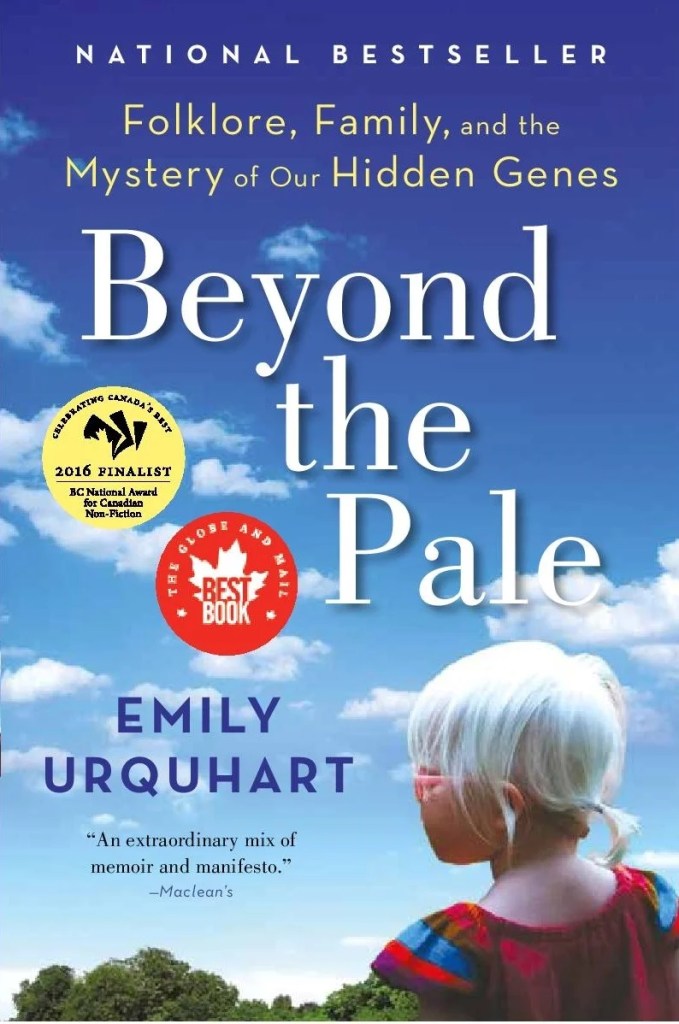
If you are interested in the experience of a family with albinism in Canada, consider reading this award-winning book, Beyond the Pale: Folklore, Family, and the Mystery of our Hidden Genes, by Emily Urguhart.
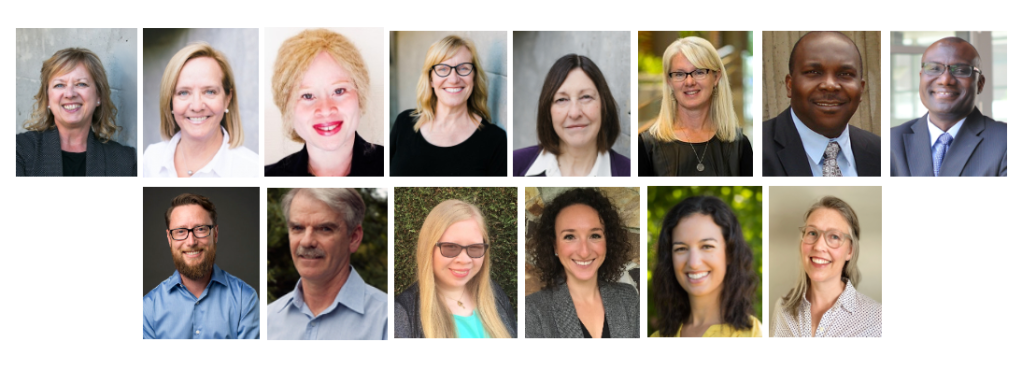
Canadian team:

 Mothering & Albinism