
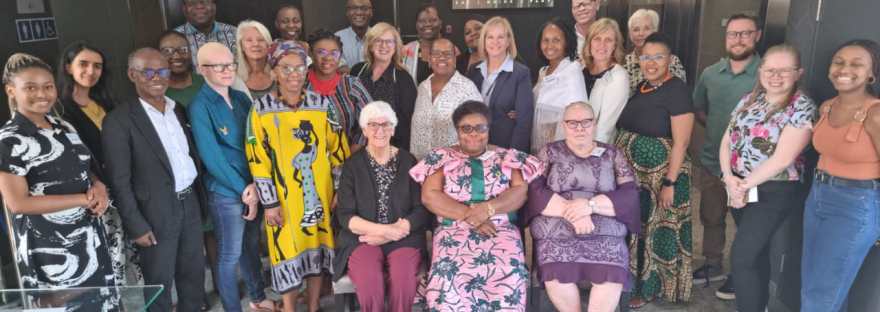
Our 4-phase project has now transitioned from Phase II (2024/25) data collection in South Africa, Canada, and Ghana to our creative Phase III. Building on the knowledge and relationships from Phase I and II, we are now developing equity-oriented resources for curriculum and policy.
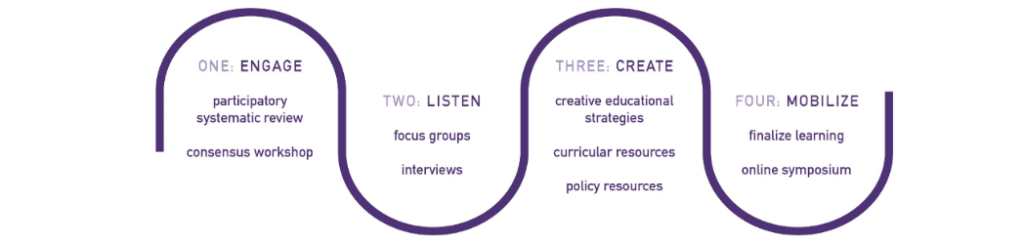
We are currently working in four Cooperative Action1 Groups to create these resources:
- Digital Stories2 to capture different vantage points about topics of importance to the perinatal care of mothers who give birth to a baby with albinism.
- Policy Brief on Respectful Maternity Care for Persons with Disability
- Care Pathway Guideline following the Birth of a Baby with Albinism
- Human Rights Education Framework for Health Professions Education
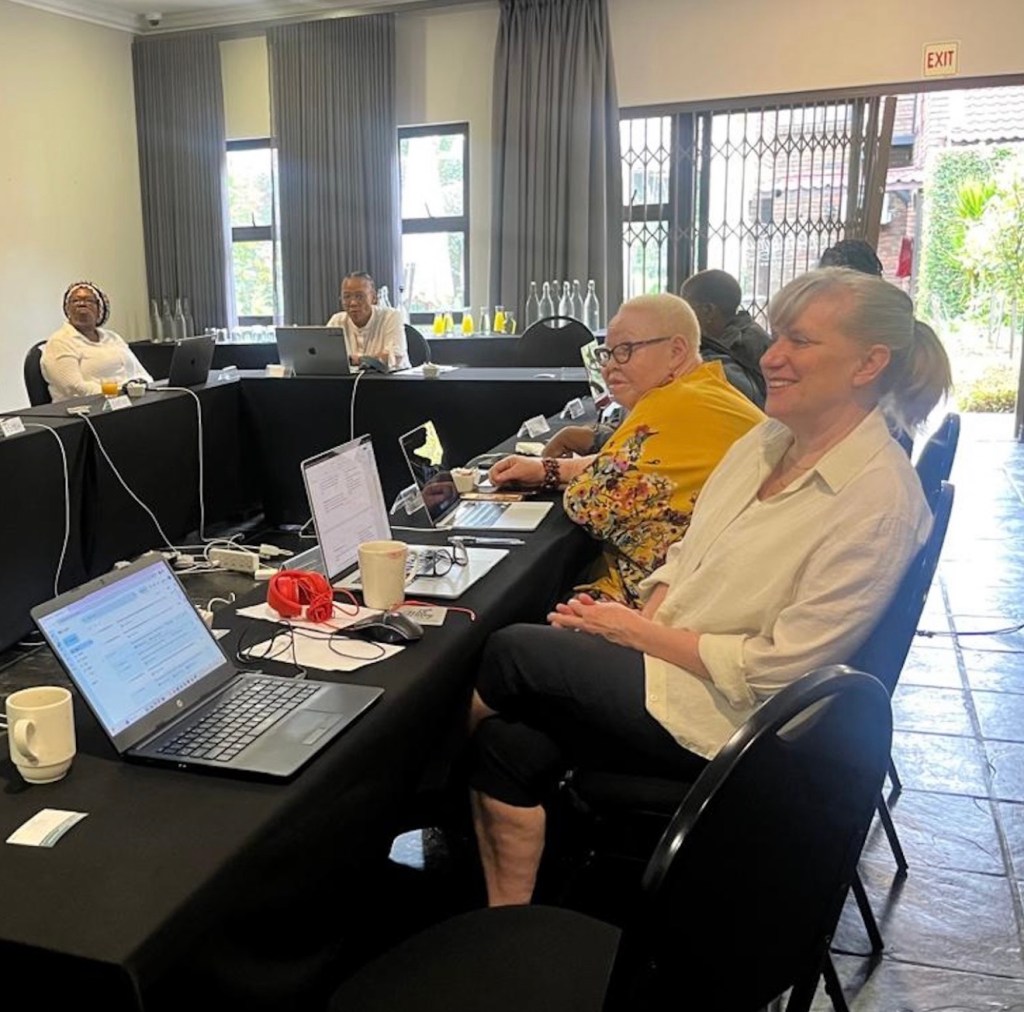
Each Cooperative Action Group is comprised of academic partners, healthcare providers, decision-makers, and family members impacted by albinism. Each action group also serves as a “lab” for research interns to learn about human rights, social change, and global health. The Action Groups are meeting monthly and online during this Phase. By collectively developing creative resources, we are bringing alive the birth stories of our team members/participants, and meaningfully integrating learning from our intersectoral collaborations and research findings. Our creative, practical resources will guide the practice of health service providers and impact policy. The resources will be gathered into an Online Toolkit that will be made widely available and will be illustrated with African art.
Each Phase has had an aspect of drawing more people into the cause of the human rights of persons impacted by albinism. The international network collaborating during Phase III has members from South Africa, Tanzania, Ghana, Nigeria, Zambia, England, and Canada. It is remarkable to work together in cooperative ways, learning from each other, benefitting from our respective connections, and building and mobilizing transdisciplinary knowledge.
References
- Howard, J., Ospina, S., & Yorks, L. (2021). Cooperative inquiry as dialogic process. In D.Burns, J.Howard, & S.Ospina (eds.) The Sage handbook of participatory research and inquiry (p.427-443). Sage.
- Rieger, K.L., Bennett, M., Martin, D.E., Hack, T.F., Cook, L., & Hornan, B. (2021). Digital storytelling as a patient engagement tool with Indigenous women: How the medicine wheel guided our Debwewin journey. Qualitative Health Research, 31(12), 2163–2175. https://doi.org/10.1177/10497323211027529

 Mothering & Albinism