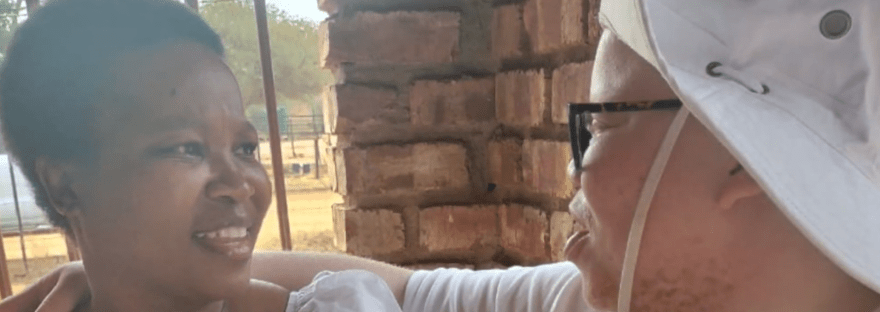
Over the past year, we have been hearing from mothers, fathers, and community members (healthcare providers and health educators, advocates, and policymakers) through interviews and focus groups conducted as part of our research on perinatal experiences of mothers giving birth to a baby with albinism. We have now moved into Phase III (Create) of our project, where we have been developing a variety of knowledge mobilization materials to share findings from our research. One of these initiatives involved creating short videos through digital storytelling. Digital storytelling is both a process and a product. It includes unique facilitation approaches, skills, and techniques that support participants in creating meaningful stories about their lives and experiences (Lang et al., 2019). The final product is a short 3–4-minute video that combines images, video clips, voiceovers, and editing techniques to share an important personal story.
Earlier this year, a Mothering and Albinism team, led by Dr. Michael Lang (Canada), Dr. Kendra Rieger (Canada), Dr. Ramadimetja Shirley Mooa (South Africa), and Innocentia Mgijima-Konopi (South Africa) met in Pretoria, South Africa, for a workshop that brought together mothers and fathers of children with albinism, as well as healthcare providers and educators, to create their own digital stories. We are pleased to feature one of these stories below, created by Tshego Keitsemore from South Africa, along with a reflection from nursing student and project intern Malesolo Yvonne Mogano.
In her reflection, Malesolo shares how her understanding of albinism evolved through personal interactions with people with albinism in her community. She reflects on the misconceptions and stigma that can shape attitudes and experiences, while emphasizing the importance of education in fostering understanding, inclusion, and respect. Her reflections resonate strongly with this year’s International Albinism Awareness Day theme, “Proudly in My Skin — Celebrating All Skin Tones.” By encouraging greater awareness and challenging harmful misunderstandings, Malesolo highlights how healthcare providers can create environments where people with albinism are valued, respected, and able to participate fully in society. Her message also underscores the human rights principles of dignity, equality, and non-discrimination that are essential to the well-being and inclusion of all people.
In Malesolo’s words:
“Tshego Keitsemore’s story resonated with me. The lack of knowledge within the community she described was something I also experienced growing up, especially during my primary school years. I remember attending school with a girl who had albinism. She was the only learner in school with that pigmentation, and it was my first encounter with someone living with albinism. Although we were not close, I often wondered what would happen if she touched me, whether I could also be affected, and why she looked the way she did.
From this experience and Tshego’s story, I learned that a lack of knowledge can be detrimental to society. If I had those thoughts as a child, many other children likely had similar misconceptions too. Such misunderstandings can affect the way people interact with individuals with albinism. People may feel uncomfortable or “unsafe” coming close to or touching them simply because they do not understand the condition. In children, especially, where social interaction and play are important parts of development, this can lead to exclusion and isolation of the child with albinism due to a lack of awareness and understanding by the community.
As I grew older, I began learning more about albinism. Some of the information I encountered was inaccurate and rooted in stigma, while other information was factual. I also recall learning briefly about genetic conditions in high school, where albinism was mentioned. However, it was not until my second year of the Bachelor of Science in Nursing program, when I joined the Mothering and Albinism project as an intern, that I gained a deeper understanding of the prejudice and discrimination experienced by people with albinism, as well as strategies to address these challenges. Before this experience, I had given little thought to the lived experiences of individuals with albinism or to the broader realities faced by people living with disabilities and other health conditions.
This experience highlighted how a lack of knowledge in the training of future nurses and midwives can create a gap in providing holistic care. If healthcare providers do not fully understand certain health conditions and the experiences associated with them, they may unintentionally make patients feel uncomfortable or unwelcome. Lack of knowledge does not always result in intentional prejudice but sometimes in unconscious reactions or behaviours that stem from not understanding why someone appears different.
As I have reflected on the digital story, I have realized the importance of educating nursing and midwifery students about diverse physical and genetic conditions, their underlying causes, and the social challenges that often accompany them. Stories such as Tshego’s provide valuable insights that can help future healthcare providers develop a deeper understanding of the experiences of individuals and families affected by these conditions. Adequate preparation would enable future nurses and midwives not only to provide compassionate and respectful care but also to serve as advocates and educators within their communities to help reduce stigma and discrimination. As Tshego stated, “Don’t just prepare the family, prepare the community, because it takes a village to raise a child.” This message underscores the collective responsibility of healthcare providers, families, and communities in fostering supportive environments for children and families affected by albinism.”
About Tshego Keitsemore:
She is a Mothering and Albinism community partner and founded the Reamogelemg Community Organisation in the Northern Cape, South Africa. The organization supports families affected by albinism and facilitates awareness campaigns on albinism regularly in their communities. Follow their Facebook page here.
Written by:
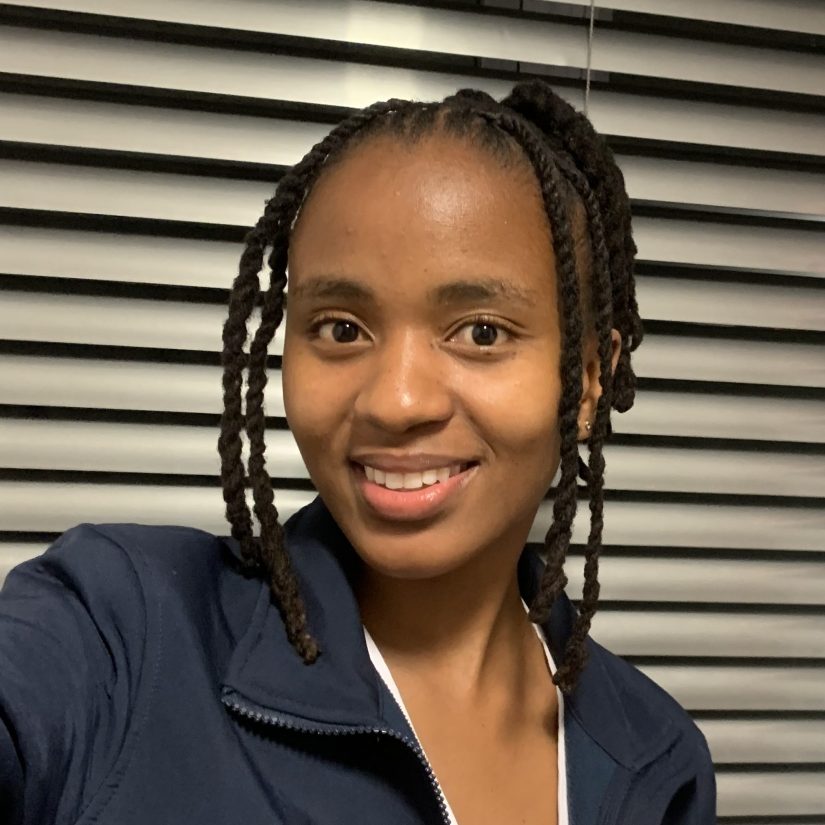
Malesolo Yvonne Mogano is a 2025-2026 student intern for the project from the University of Pretoria, South Africa.
Reference
Lang, M., Laing, C., Moules, N., & Estefan, A. (2019). Words, camera, music, action: A methodology of digital storytelling in a health care setting. International Journal of Qualitative Methods, 18. https://doi.org/10.1177/1609406919863241


