

Lisa Fanuel Ompeshi, an undergraduate nursing student and intern from the Aga Khan University in Tanzania, responds to a Digital Story created by a Shasha, a mother with a child with albinism.

Shasha shared a narrative through a Digital Story video that captures her resilience, dignity, and fight for human rights in health care. Digital storytelling of this kind is increasingly recognized as a powerful methodology in health care settings, a way of giving patients a voice and deepening learners’ empathy (Lang et al., 2019). I (Lisa Fanuel Ompeshi) was drawn to Shasha’s story because it is not just about one woman, but it reflects the lived experience of countless women in communities where respectful, rights-based care remains out of reach. Her story revealed the courage required to seek care despite real barriers, exposed the systemic gaps that made her path harder than it should have been, and offered a simple yet powerful reminder that every patient deserves compassion and dignity.
The story taught me that nursing is as much about listening and validating a patient’s experience as it is about clinical skill and that access to safe, respectful care is a right, not a privilege. It reminded me that nurses and midwives, often a patient’s first point of contact, are well placed to challenge discrimination and advocate for justice while staying sensitive to the cultural realities that patients live in.

Stories like Shasha’s belong in nursing and midwifery education. They make strong case studies for classroom discussion. Her digital story provides an opportunity for students to hear from those with lived experience, to role-play scenarios that build confidence in handling rights-sensitive situations, to connect to frameworks like the White Ribbon Alliance Respectful Maternity Care Charter, and to be carried into community health sessions to help families understand and demand their rights.
Sitting with this Shasha’s Digital Story prompted me to see patients less as cases to manage and more as people carrying their own dignity into every encounter. It sharpened my sense of responsibility as a future nurse to challenge inequity rather than accept it and to advocate for mothers, children, and vulnerable groups wherever I practice. That, in the end, is what digital storytelling in health care does best: it does not just inform, but rather it changes how we see the people in front of us (Lang et al., 2019). Shasha’s story is her personal narrative, but it is also a teaching tool, a call to empathy, and a reminder that nursing and midwifery must always stand for human rights.
Reference
Lang, M., Laing, C., Moules, N., & Estefan, A. (2019). Words, camera, music, action: A methodology of digital storytelling in a health care setting. International Journal of Qualitative Methods, 18. https://doi.org/10.1177/1609406919863241
Written by:
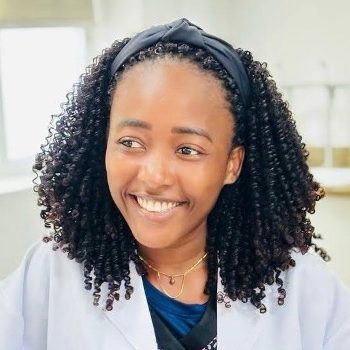
Lisa Fanuel Ompeshi, 2025-2026 Student Intern, Aga Khan University, Tanzania.


