
International Nurse Education Conference in Edinburgh (November 1-4, 2026)
Nurses play key roles in many situations with human rights at their core. Health itself is a human right. The ICN’s new definition of nursing articulates a profoundly expanded, values-oriented vision that embraces human rights, social justice, and transformative roles.
Nursing is a profession dedicated to upholding everyone’s right to enjoy the highest attainable standard of health through a shared commitment to providing collaborative, culturally safe, people-centred care and services. Nursing acts and advocates for people’s equitable access to health and health care, and safe, sustainable environments. (White et al., 2025, p.12)
To align with and support this vision of nursing, nursing education will need new approaches that include human rights education; human rights education is not often explicitly the content or substance of nursing education. Our Mothering and Albinism project has shone a bright light on the value-added (and even the imperative) of human rights education. By referring to the value-added of human rights education, we assert that while Codes of Ethics are directive, they too often remain aspirational and abstract in practice. When human rights education is added to ethics education, clarity is provided that moves from “may” and “ought” (that can inadvertently be interpreted as optional or conditional) to “must” and “are obligated”.
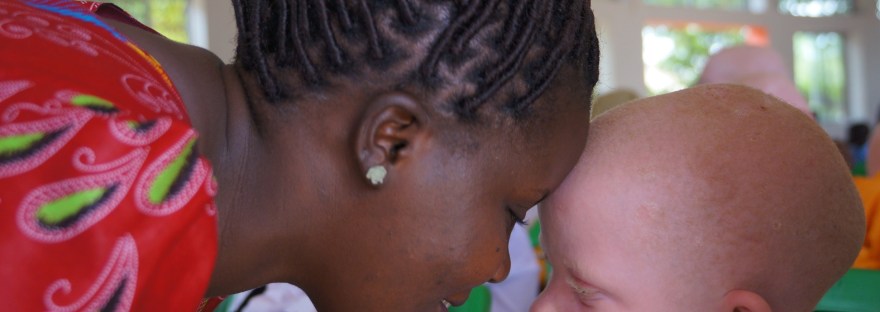
Building on our research on how health services and health professions education can better promote, protect, and fulfill the human rights of mothers who give birth to babies with albinism and their families, we created a Human Rights Education Framework. Our research highlights that nurses can play a critical role in shaping positive trajectories for families, yet many nurses have had limited education about human rights and albinism.
Human rights education must therefore be about, through, and for human rights, providing knowledge about rights and violations while ensuring learners experience dignity, inclusion, equity, and respect, and develop the skills to advocate for the rights of those in their care. Although our work centres on albinism, the lessons are relevant across nursing practice and education, including Respectful Maternity Care and the care of persons with disabilities.
The Framework was developed through dialogue with human rights experts, health educators, albinism advocates, and people with lived experience, and is now part of a Toolkit including digital stories from diverse vantage points, care pathway guidelines, a policy brief on Respectful Maternity Care, and the Human Rights Framework for health professions education with albinism as a case example.
We recently presented the Framework at the International Nurse Education Conference in Edinburgh (November 1-4, 2026). We are inviting global conversations about the place of human rights in nurse education at a global hybrid symposium in August 2027.
Looking ahead: Global Hybrid Symposium in August 2027
We will be bringing this work together at a hybrid global symposium in South Africa in August 2027, gathering leaders from nurse education with professional associations, international organizations and international agencies (e.g., ICN, WHO, and UN), albinism organizations (e.g., Africa Albinism Network, civil society organizations), and government representatives. The theme will be human rights education for social and health professions, using albinism as a case example while exploring implications for disability, Respectful Maternity Care, and other areas of practice. The symposium will centre on interactive exchange and shared learning. We will present the educational resources developed through our collaborative work in a digital Toolkit, with invited responses from global leaders, educators, practitioners, advocates, and other end-users.
The symposium will culminate in the signing of a social commitment to the actualization of the rights of persons with albinism and their families. We will be sharing educational materials that nurses, educators, students, advocates, and health and social service professionals can use, adapt, and distribute in their own settings.
Our goal is to add human rights content to nursing curricula as well as support a broader commitment to human rights education in nursing, where nurses are prepared to recognize and respond to human rights concerns in situations such as Respectful Maternity Care, albinism, disability, stigma and discrimination, and inequitable access to health and health care.

Sign up to be notified and receive an invitation to the Hybrid Symposium.
Stay connected: Follow us on social media for new resources, digital stories, and updates about the 2027 symposium.