

Anitha Francis Mganga, an intern from Aga Khan University in Tanzania, writes:
When I joined the Mothering & Albinism Project as a student intern, I came with a background in midwifery and maternal and child health, practicing in Tanzania. I understood the importance of respectful, family-centered care. However, this internship has challenged me to look beyond the clinical encounter and think more deeply about what healthcare feels like for families affected by albinism.
One of the most important questions I have learned to ask is the following:
What does the healthcare experience look like for a mother, her baby, and her family when albinism is part of their story?
Beyond a genetic condition
Through this internship, my understanding of albinism has expanded significantly. I have learned that albinism cannot be understood only as a genetic condition or through its clinical manifestations. The experiences of people with albinism and their families can also be shaped by stigma, discrimination, misconceptions, barriers to healthcare, vision needs, skin protection and skin cancer prevention, psychosocial wellbeing, safety, and broader human rights concerns. This has been an important shift in my thinking as a healthcare professional. I have learned to look beyond the diagnosis and consider the person, the family, and the environment in which they live.
What does this mean for a midwife?

As a midwife, the moment of birth particularly stands out to me. The birth of a baby is a significant experience for every family. When a baby is born with albinism, parents may have questions, concerns, or fears. In settings where myths and misconceptions exist, the way healthcare professionals communicate at that moment becomes even more important. A midwife may be one of the first professionals to interact with the mother and family. That means our response matters.
We need to communicate respectfully.
We need to provide accurate information.
We need to listen without judgment.
We need to support mother-baby bonding.
And we need to help families understand where they can access appropriate ongoing care and support. This experience has reinforced something important for me:
Respectful care begins with how we welcome the family.
Why a care pathway matters
My activities as an intern involved participating in a Collaborative Action Group to develop a Care Pathway that would guide healthcare professionals in supporting mothers who give birth to a child with albinism and their families. My involvement in the Care Pathway Action Group has helped me understand why a clear care pathway can be valuable for healthcare professionals.
A care pathway can provide a practical framework for thinking about the needs of families at different stages from antenatal care and birth through discharge and early childhood and into continuing care.
As a midwife, I can imagine how useful this would be in practice.
It can help healthcare professionals ask:
- What information does this family need?
- What should I consider at this stage of care?
- What support might the mother and baby require?
- When should I refer?
- Where should I refer them to?
- How can I support continuity of care?
Without clear guidance, the care and support family receive after the birth of a baby with albinism may vary considerably depending on the healthcare providers’ knowledge and confidence. A well-developed care pathway can help move care from being dependent on individual knowledge towards a more consistent, coordinated, family-centered, and equitable approach.
The mother’s experience matters
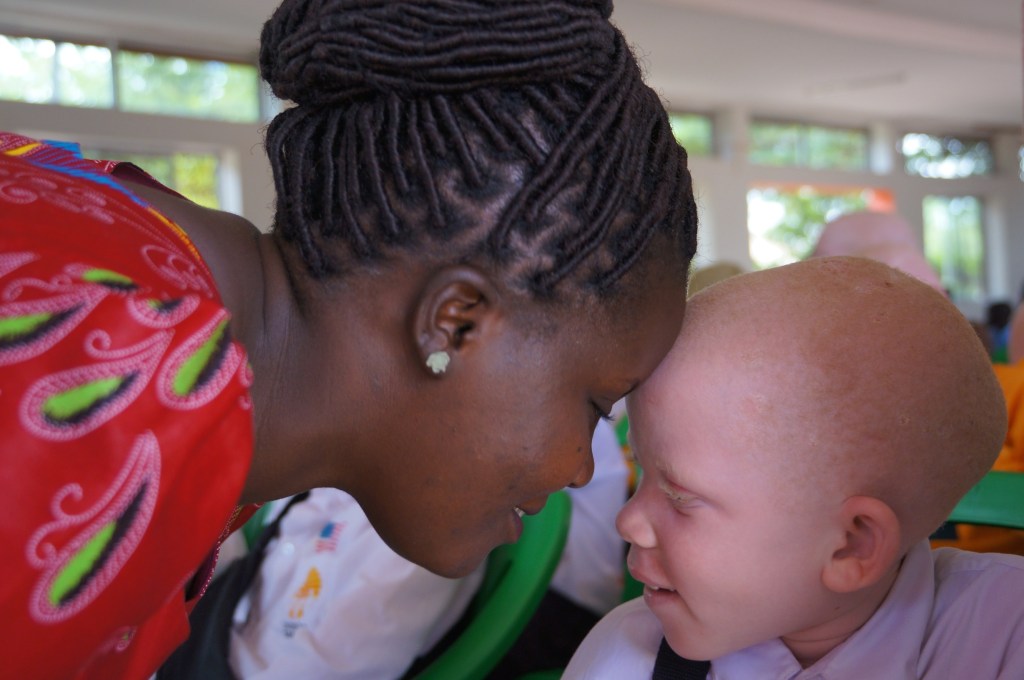
The word “Mothering” in the Mothering & Albinism Project has also influenced how I think about this work. The focus should not be only on the child’s clinical needs. We must also consider the mother’s experience. A mother may need information, reassurance, emotional support, and an opportunity to ask questions without fear of judgment. She should not be blamed or feel isolated because her child has albinism.
Healthcare professionals have an opportunity to create a supportive environment from the very beginning, one where parents are respected, bonding is encouraged, accurate information is provided, and families are connected to the services they need.
From healthcare to human rights
Another major lesson from this internship has been recognizing the relationship between healthcare, equity, and human rights. I now see a care pathway as more than a clinical document. It can also be a tool for equity. When a Care Pathway helps healthcare professionals provide timely information, appropriate referrals, respectful communication, and continuity of care, it can help reduce gaps in access and improve the experience of families. This is particularly important for people with albinism, whose experiences may be affected not only by their health needs but also by social attitudes, discrimination, and barriers within systems. For me, this means that providing good care is not simply about knowing what condition a person has. It is also about asking:
- Are they being heard?
- Are they being respected?
- Can they access the services they need?
- Are their rights being protected?
What I will carry into my midwifery practice
The Mothering & Albinism internship has strengthened my understanding of policy review, care pathways, advocacy, interdisciplinary collaboration, and health equity. But beyond these professional skills, it has changed how I think about my role as a midwife. I have learned that healthcare professionals should not make assumptions about what families need. We need to listen to their experiences and ensure that their voices inform the systems and pathways designed to support them. I will carry this lesson into my future practice:
Caring for a baby with albinism begins before we talk about treatment.
- It begins with how we welcome the family.
- It begins with how we communicate.
- It begins with how we protect dignity.
- And it continues by connecting the family to the care and support they need.
I am grateful to the Mothering & Albinism Project for giving me the opportunity to learn from researchers, healthcare professionals, advocates, and fellow interns. This experience has not only expanded my knowledge about albinism; it has challenged me to become a more thoughtful midwife, a stronger advocate, and a better listener.
For me, meaningful health equity means ensuring that every family, including families affected by albinism, can experience healthcare with dignity, respect, inclusion, and the support they deserve.
Written by:

Anitha Francis Mganga
Midwife | Maternal Health Advocate | Mothering & Albinism Student Intern, 2025–2026


